
Article
The Howey Test: How a Lake County Citrus Grove Shaped American Law
Article
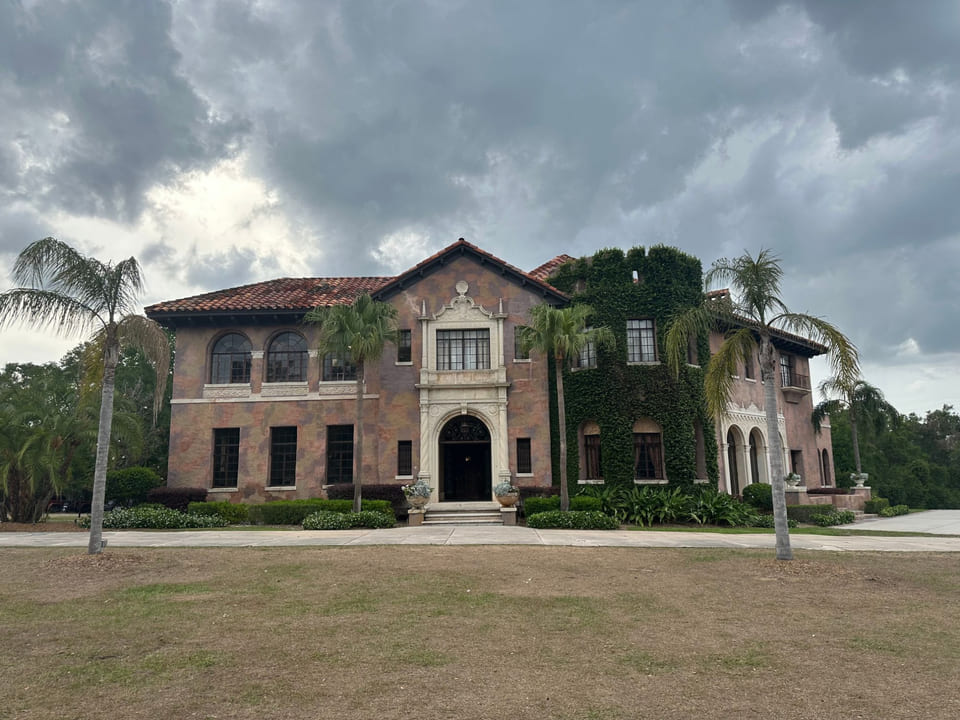
I toured the Howey Mansion not long ago, expecting a pleasant afternoon of local history and beautiful architecture. I got that. What I did not expect was to come away realizing how much legal history started on that property, and that I had driven past it for years without knowing any of it.
Drive through Howey-in-the-Hills today and it looks like a quiet lakeside town in the middle of Lake County. What most people passing through never realize is that the name on the welcome sign is also the name of one of the most cited decisions in American law. A citrus grove here produced a United States Supreme Court case that lawyers, regulators, and now cryptocurrency companies still argue about eighty years later.
The man behind the name
William J. Howey bought 60,000 acres in Lake County in 1916. By the town’s own account he was “not a speculator, but a land promoter,” and he planted most of that land in citrus, becoming one of the first Florida growers to ship fruit to England. He founded the town that took his name and twice ran for governor on the Republican ticket.
In 1924 he and his wife, Mary Hastings Howey, finished the plans for a permanent home, and by the end of 1925 the twenty-room house was, as the town puts it, “finished, furnished, and occupied.” The architect was Katherine Cotheal Budd of New York. The style is Mediterranean Revival, the estate runs to about fifteen acres, and Calvin Coolidge was among the guests. The house has been on the National Register of Historic Places since 1983. It is also the building I was walking through when none of this had yet occurred to me.
To sell his oranges, though, Howey did something clever, and it is the selling, not the citrus, that made history.
A citrus grove that became a Supreme Court case
Howey did not just sell oranges. He sold the groves themselves, in small tracts, to buyers from up North who came down for the winter sunshine. Most of them had no interest in farming and no idea how. So a sister company, Howey-in-the-Hills Service, Inc., offered each buyer a service contract: the company would tend, harvest, and market the fruit, and the buyer would collect a share of the profits without lifting a finger.
The buyers were, in truth, passive investors. They put in money and expected a return from Howey’s work. The Securities and Exchange Commission said that made these arrangements “investment contracts,” which are securities that have to be registered under the Securities Act of 1933. Howey argued he was simply selling land and a farming service, not securities.
In 1946, the Supreme Court sided with the SEC. The decision is SEC v. W.J. Howey Co., 328 U.S. 293 (1946).
The Howey Test
To decide the case, the Court gave the term “investment contract” a meaning that has shaped securities law ever since. An investment contract, the Court said, is a scheme in which a person “invests his money in a common enterprise and is led to expect profits solely from the efforts of the promoter or a third party.”
Courts generally describe that as three elements:
- an investment of money,
- in a common enterprise,
- with profits expected to come from the efforts of others.
That standard is known, fittingly, as the Howey Test.
Two points of precision are worth keeping straight, because they are the ones most often lost. First, Howey defined “investment contract,” not “security.” An investment contract is one kind of security among the many that Florida’s securities statute lists. So meeting the test tells you that you have an investment contract, and therefore a security, but it is not a master key to the whole category. The Supreme Court later held that Howey is not the test for ordinary stock, and not the test for promissory notes either.
Second, courts have not always stated the test the same way. The 1946 opinion says profits expected “solely” from the efforts of others. Later decisions read “solely” less literally, and some Florida opinions now state that element without the word at all. Florida’s appellate districts have disagreed about how the test fits into the statutory definition, to the point that conflict among them has been certified. The practical upshot is that the version of the test a court applies, and how strictly it applies it, can depend on the jurisdiction and on the instrument in front of it.
Why a citrus case still makes headlines
The genius of the Howey Test is that it does not care what the investment looks like. It looks at the substance of the deal, not its label. The Court said as much itself: the definition “embodies a flexible rather than a static principle, one that is capable of adaptation to meet the countless and variable schemes devised by those who seek the use of the money of others on the promise of profits.”
That is exactly why an orange-grove case from 1946 keeps turning up in the most modern disputes imaginable. When regulators and courts ask whether a cryptocurrency or a digital token is being sold as an investment contract, the Howey framework is still where the analysis begins. A rule born in a Lake County citrus grove now helps decide cases about blockchain.
What the Howey story teaches the rest of us
Howey died in 1938. His daughter Lois Valerie died in 1941, and his wife Mary lived in the house until her death in 1981. All three are buried in a marble mausoleum on the grounds. The house left the family after that, and there followed years of decline and a foreclosure before new owners restored it and reopened it as an events venue, which is how I came to be standing in it.
So the family graves sit on land the family no longer owns. That detail is hard to shake, and it is the part of this story closest to the work I actually do. Howey could shape how his groves were sold, and the Supreme Court had a good deal to say about that. What he could not fully control was what became of the house, the land, and the people he left behind once he was gone.
William Howey built real wealth out of Lake County land, and the law shaped how that wealth could be sold and passed along. Most of us are not building a citrus empire, but the underlying concern is the same one I hear from families across Lake County: I worked for what I have, and I want it to end up with the right people, with as little trouble as possible.
That is what estate planning and probate are really about. A few pieces of it come up again and again:
- Your home and land. Florida gives your homestead special protection, and it also limits who you can leave it to. A plan that ignores those rules can fail exactly when it matters most.
- Keeping property in the family. Whether it is a lakefront lot, farmland, or the family house, how the title is held and what your documents say will decide whether it passes smoothly or ends up in a probate dispute.
- Passing things without a court fight. Wills, trusts, and the right beneficiary designations can move property to your family with far less time and cost than an estate left to chance.
You do not need a Supreme Court case to your name to need a plan. You just need something worth protecting and people you want to protect it for.
The Howey name ended up on a legal doctrine and on a town down the road. The lesson for the rest of us is smaller but just as real: what you build is worth protecting, and a clear plan is how you make sure it lands where you intend.
If you have been meaning to put a plan in place, or you are not certain the one you have still says what you want it to say, I am glad to talk it through. I work with families across Lake County on exactly this, and it is usually simpler than people expect.
This article is general information, not legal advice, and does not create an attorney-client relationship. Every situation is different, please consult an attorney about your specific circumstances.
Ready to talk? Let’s find a way forward.
Reach out today and take the first step toward peace of mind.